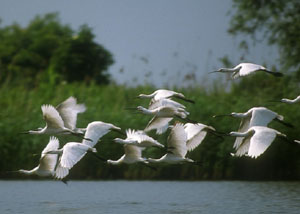
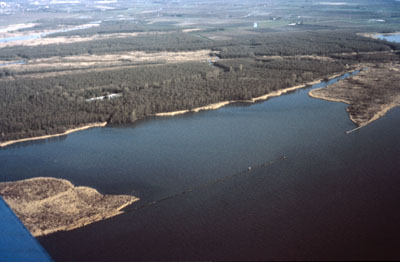
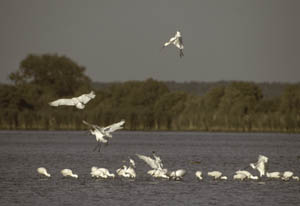
Within the Biesbosch there is a waterway known as the ‘Lepelaarsgat’ (literally the Spoonbill Creek). In the 1960’s this was an important area for the Spoonbills. The tidal range offered shelter (over day) and food (at night). After the Delta Plan had removed the large tidal range it was hoped that this area would remain important for spoonbills as a breeding area. Unfortunately this did not happen in the way it was hoped. Lack of suitable nesting areas and loss of important food sources such as sticklebacks, lead to the loss of breeding possibilities for the spoonbills. However the Biesbosch is still a very important stop-over spot for spoonbills on the way from overwintering in Africa to their breeding grounds in the ‘Oostvaardersplassen’ (a nature area in Flevoland) and the Wadden Islands. During the migration months of July to September more than a 100 spoonbills can be seen here. Though the ‘Lepelaarsgat’ did not become an important breeding ground for spoonbills, the importance of this area as a feeding station together with the creation of more resting and feeding spots in the areas surrounding the Biesbosch means that the spoonbill will remain a natural attraction in this area.
_sm.jpg)
_sm.jpg)